The problem
Right now, your by-products are just waste.
For most beverage businesses, organic by-products are hauled away at a cost, with nothing to show for it.
Discarded value
SCOBY, spent grounds, and tea residue are treated as trash the day they're produced, even though they're clean, consistent organic material.
An operational burden
Storing, hauling, and disposing of wet organic by-products takes time, space, and money every single week.
Hard-to-prove sustainability
“We reuse our waste” is difficult to make concrete for customers without a real downstream story to point to.
No reuse pathway
Most small producers simply have no partner set up to take an organic stream and turn it into something visible and valuable.
What we can use
We're always evaluating new feedstocks.
We evaluate each potential feedstock on consistency, cleanliness, composition, and suitability for bacterial-cellulose growth. Not every stream is a fit, and that's something we'll assess together.
- Kombucha SCOBY & fermentation liquid
- Spent tea leaves & tea residue
- Coffee grounds & related organic inputs
- Other clean fermentation by-products
How it works
From by-product to bioleather
A clear, six-step workflow. You provide the by-product; we handle everything after that.
Supplier assessment
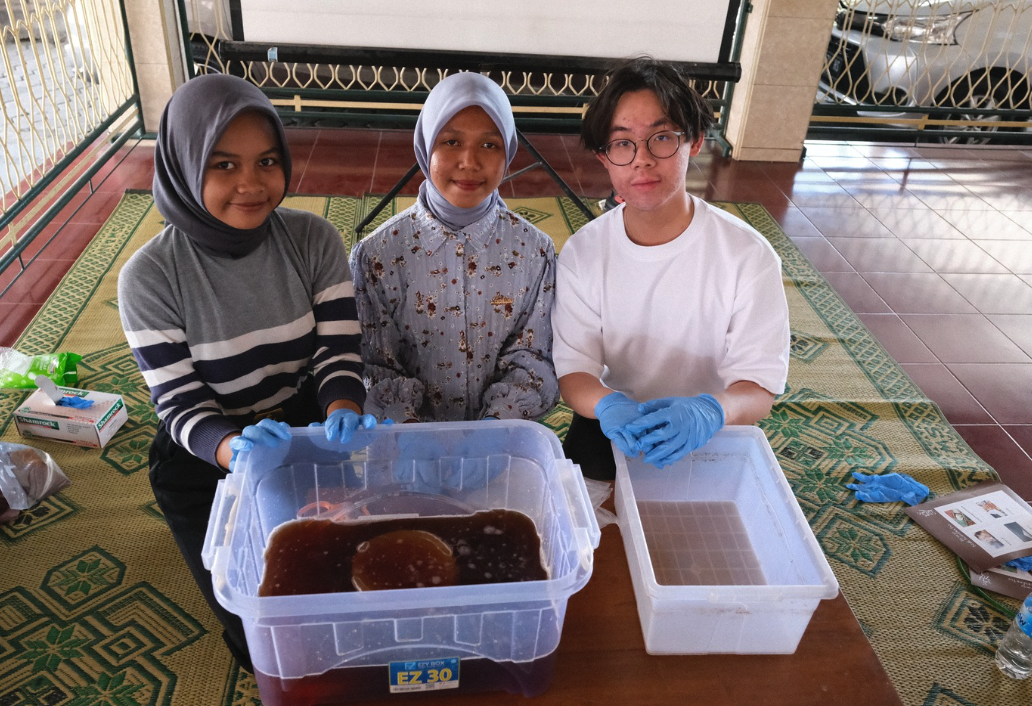
We review your by-product together: what it is, how much you produce, how often, and whether it's a good candidate for testing.
You · Tell us what you make.Symbia · Assess fit and next steps.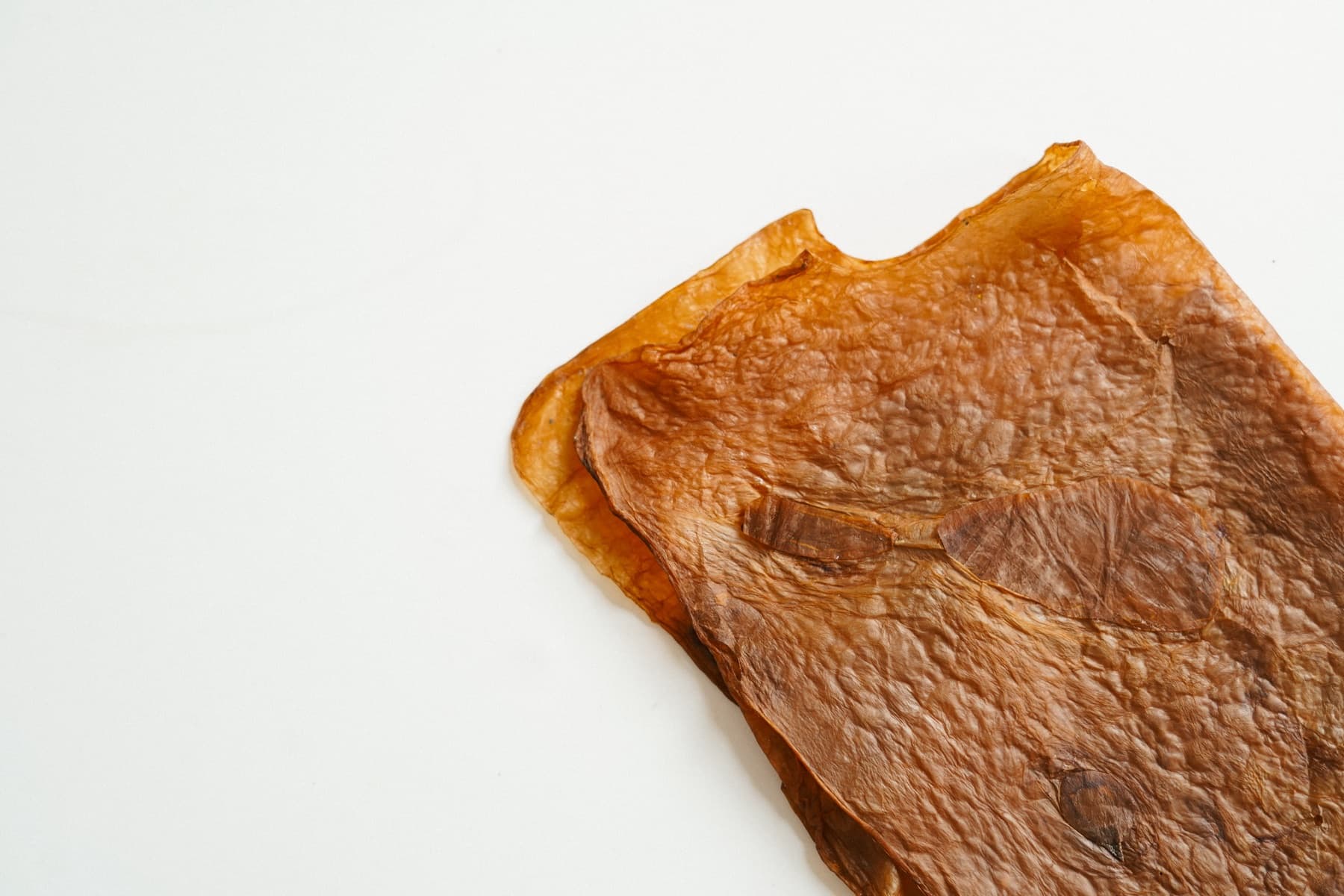
What a clean stream turns into
Collection & handling
We agree a pickup rhythm that fits your operation and simple storage guidance so the material stays usable between collections.
You · Set the agreed stream aside.Symbia · Handle collection, free of charge.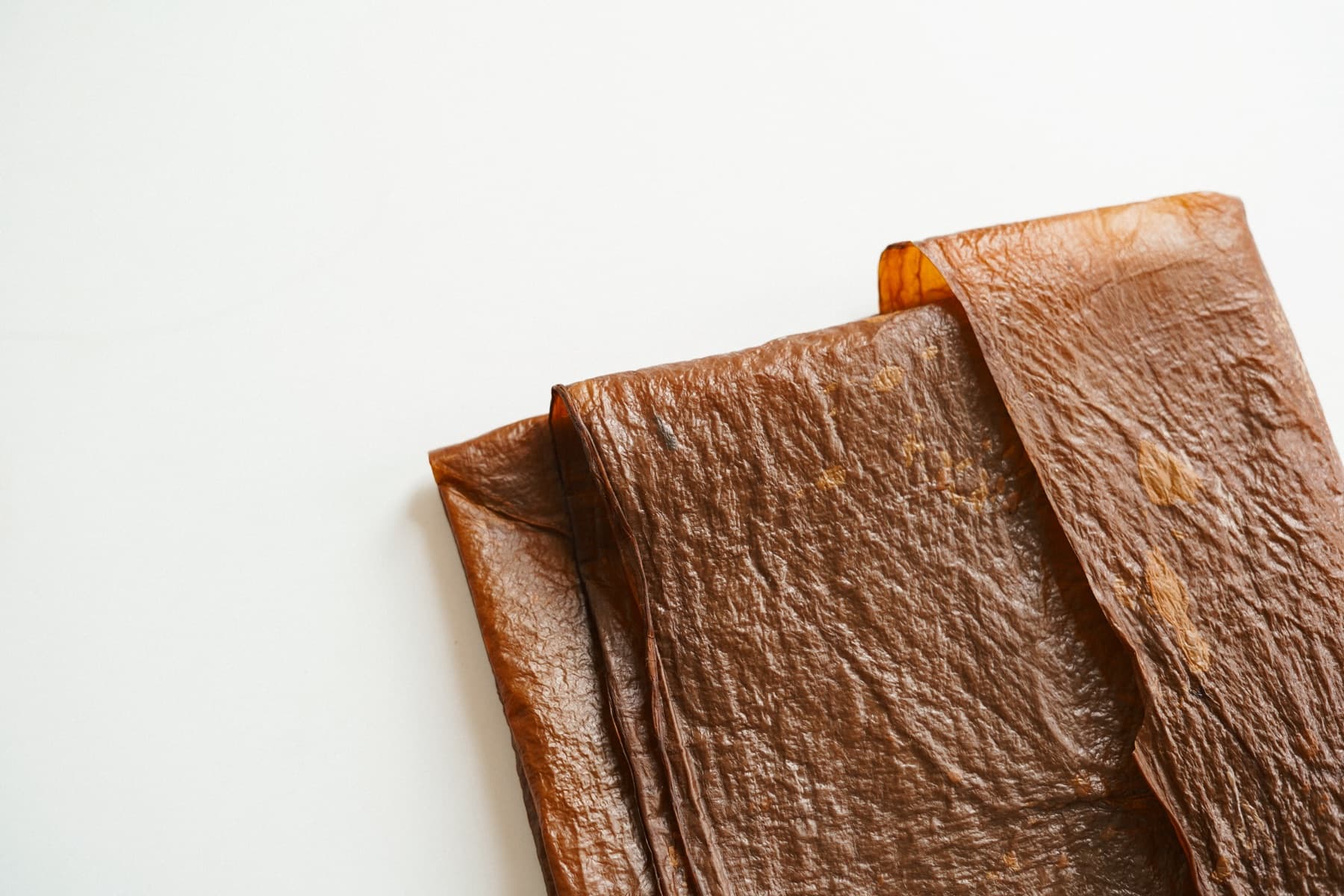
Finished sheets, folded and stacked
Feedstock preparation
Back at the studio, the recovered material is cleaned, filtered, and prepared to feed our cultivation system.
Symbia · Handle all processing.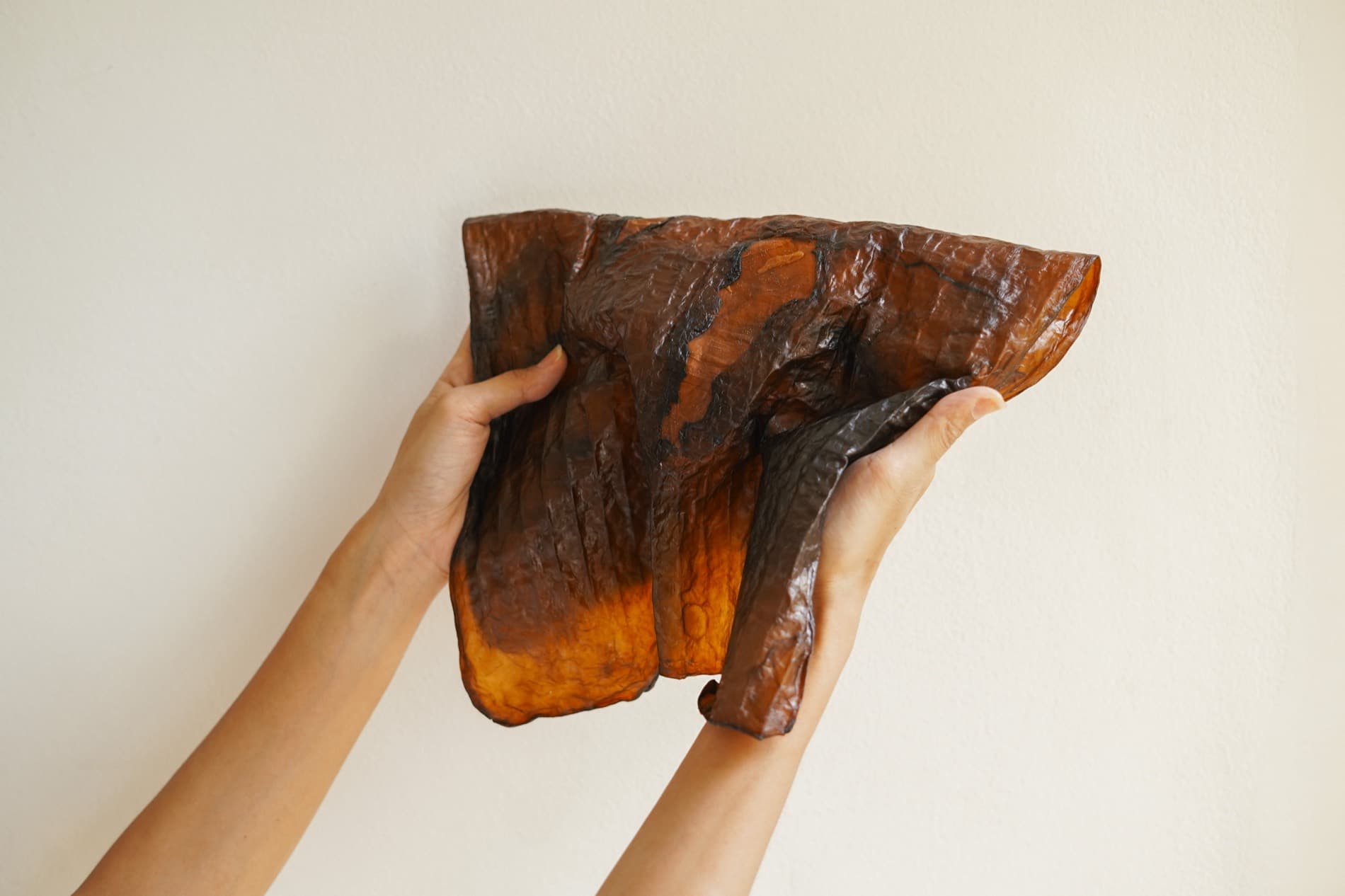
One growth, at full size
Bacterial-cellulose cultivation
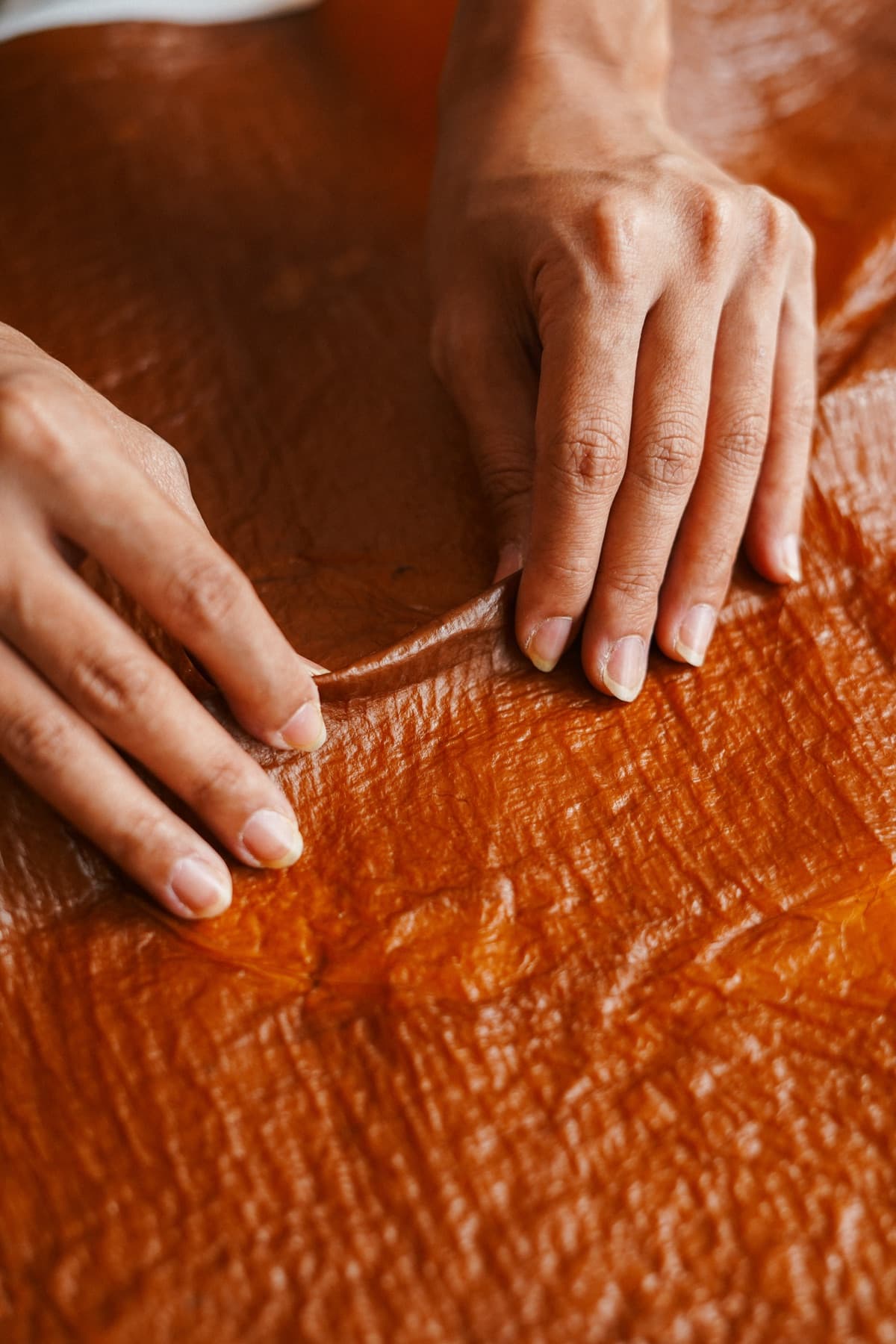
Under controlled conditions, microorganisms ferment the prepared feedstock and grow cellulose into sheets over time.
Symbia · Run the cultivation.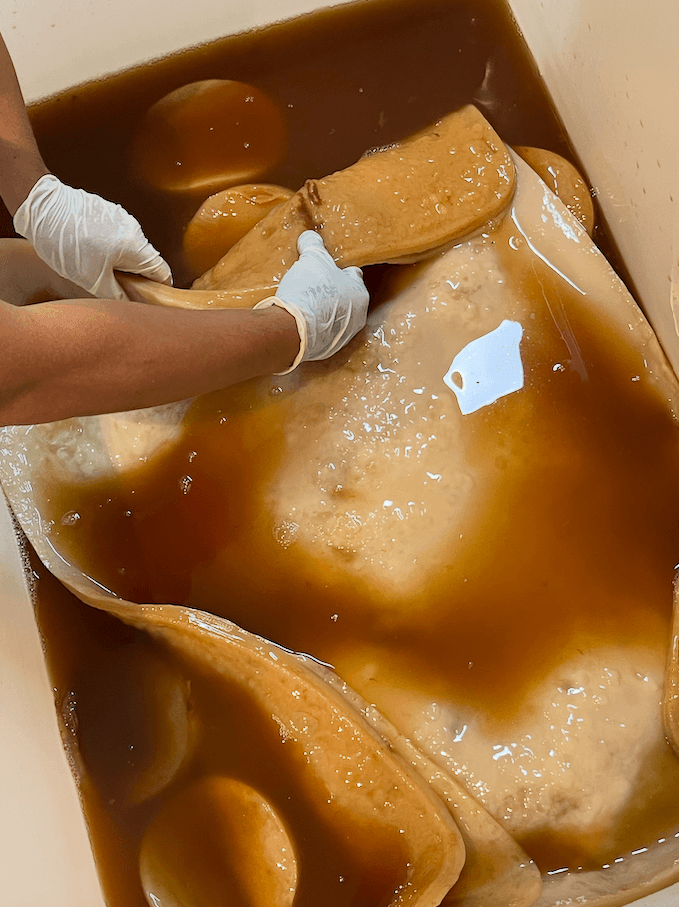
Lifting a pellicle from the vat
Drying, treatment & finishing
The grown cellulose is pressed, dried, and finished into a workable material with the feel and durability of leather.
Symbia · Finish the material.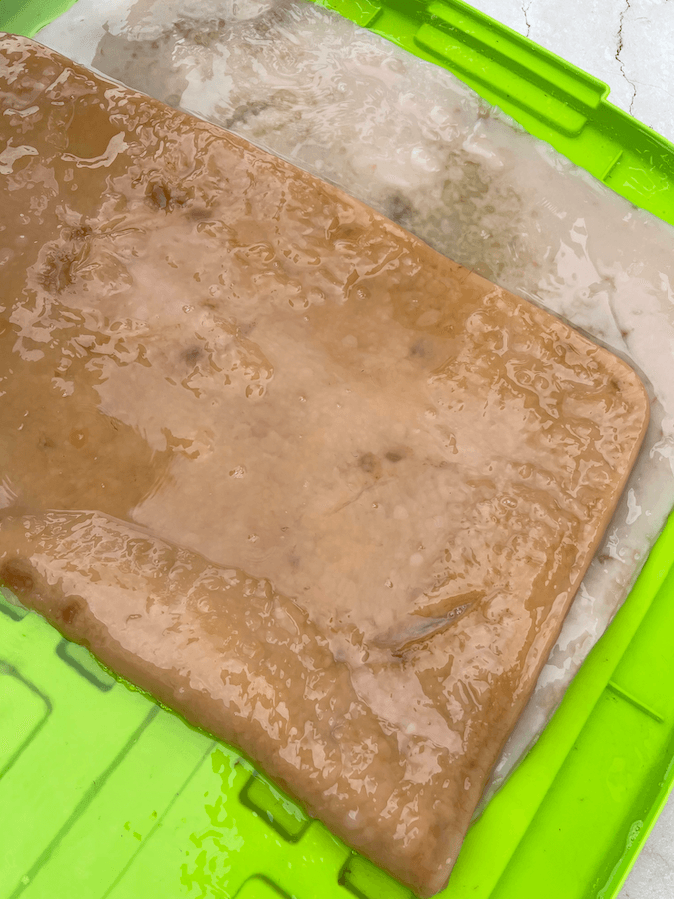
Laid out on the drying rack
Prototype & product development
The finished bioleather is tested and developed into products: accessories, bags, apparel components, and prototypes.
Symbia · Build & showcase with partners.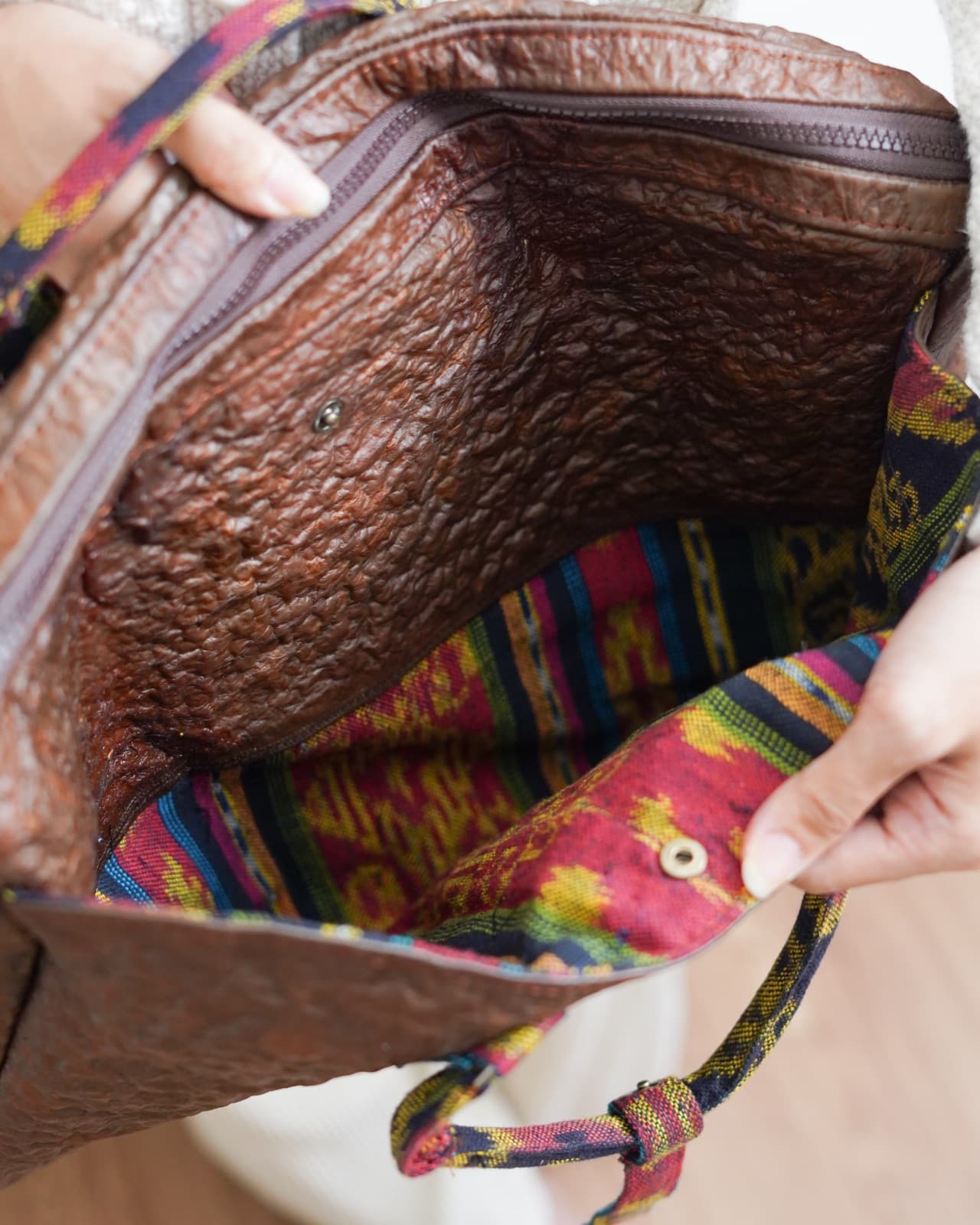
A finished bag, lined in Tenun
Environmental value
Every stream we redirect is one that doesn't go to waste.
Why it works
A partnership, not a favor.
Your by-product supports our material development, and our work gives your waste stream a new story and real potential value.
For suppliers
- A concrete circular-economy story
- Less organic waste to manage
- A role in local material innovation
- Visibility through collaborations & events
For Symbia
- Reliable local feedstocks
- Continued material research
- New product possibilities
- Lasting local partnerships
Become a supplier
Tell us what your business produces
Say what you make, the organic by-product it generates, the rough quantity, and how often it is available. On the contact page, choose “An organic by-product to supply” and the form will ask for exactly that.
- What it costs you
- Nothing. We handle collection.
- What we need from you
- The agreed stream, set aside.