Impact
The method travels further than the material.
Two programmes run alongside manufacturing. One puts the method in other people's hands, free of charge. The other keeps the material itself close to carbon neutral.
Teaching
The method travels with the people who learn it
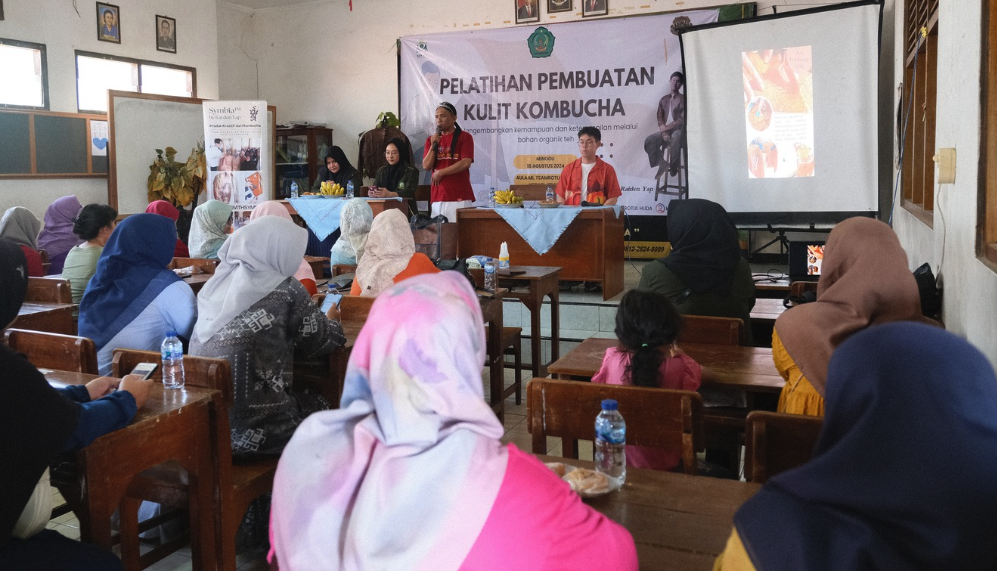
Symbia visits rural Indonesian provinces to run training programmes free of charge, providing every material and skill a craftsperson needs to grow their own Kombucha Bioleather and sell what they make locally.
Sessions run in villages, local schools and vocational education centres. The workshops teach the whole process, both growing the material and navigating social entrepreneurship.
Environmental offsetting
Fermentation instead of tanning
The material is grown rather than manufactured. Fermentation replaces the chemistry of conventional leathermaking, and the inputs are organic by-products that would otherwise be discarded.
The process is practically carbon neutral, with the exception of transport emissions.
By the numbers
8,000kg+
CO₂ offset
We outsource our calculations and record data of the kilograms of material we produce as well as the emissions that normal leathermaking processes take up. Our fermentation process is practically carbon neutral with the exception of transportation emissions.
16k+
Students and craftspeople reached
Students either attend our events or act as ambassadors for our cause while craftspeople are taught to both grow Kombucha Bioleather themselves and locally advertise products made with our material. Aside from most of these people being from all over Indonesia, we have worked with students in Asia and in the US as well.
5
Provinces visited
We have reinvested all profits back into Symbia to fund mission trips to rural Indonesian villages and teach craftspeople in person. Some of our locations include local schools and vocational education centers, where we teach free of charge.
How a programme runs
Free to attend, and it does not end when we leave.
The point of a session is that the craftspeople who attend can grow the material without us afterwards.
- Runs in
- Villages, local schools, vocational education centres
- Cost to attend
- None, in every session so far
- Provinces so far
- Five
Funded from the work itself
Profits go back into Symbia to pay for the trips, which is why the training can be free.
Taught in person
Sessions happen where the craftspeople are: rural villages, local schools, vocational education centres.
Materials provided
Everything needed to start growing the material is supplied, so there is nothing to buy before beginning.
The whole process, not a demonstration
Growing and finishing the bioleather, and the social entrepreneurship needed to sell it.
The value stays local
Craftspeople grow their own sheets afterwards and sell the products they make in their own markets.
Awareness
Reaching the people who will make the next material
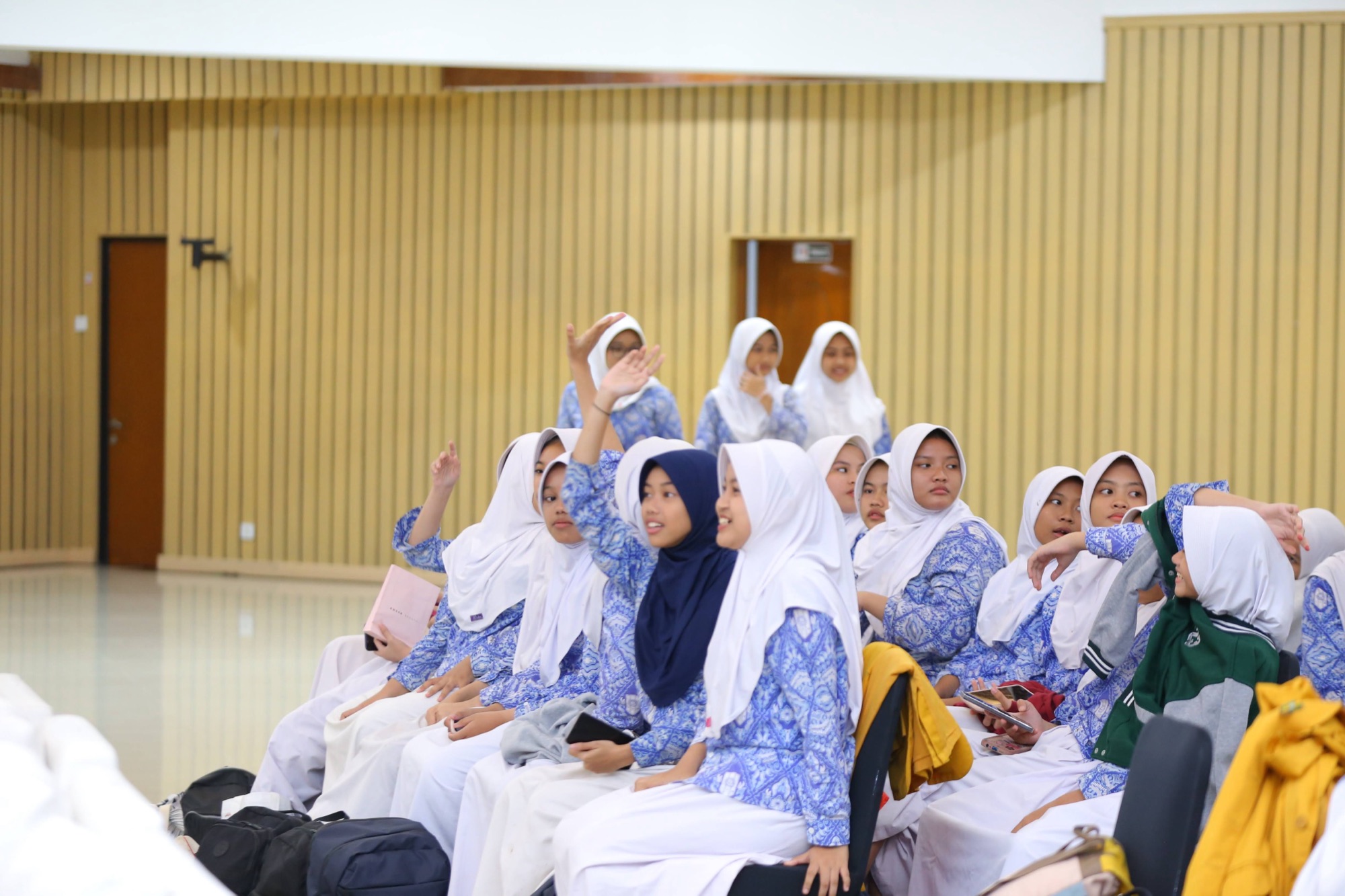
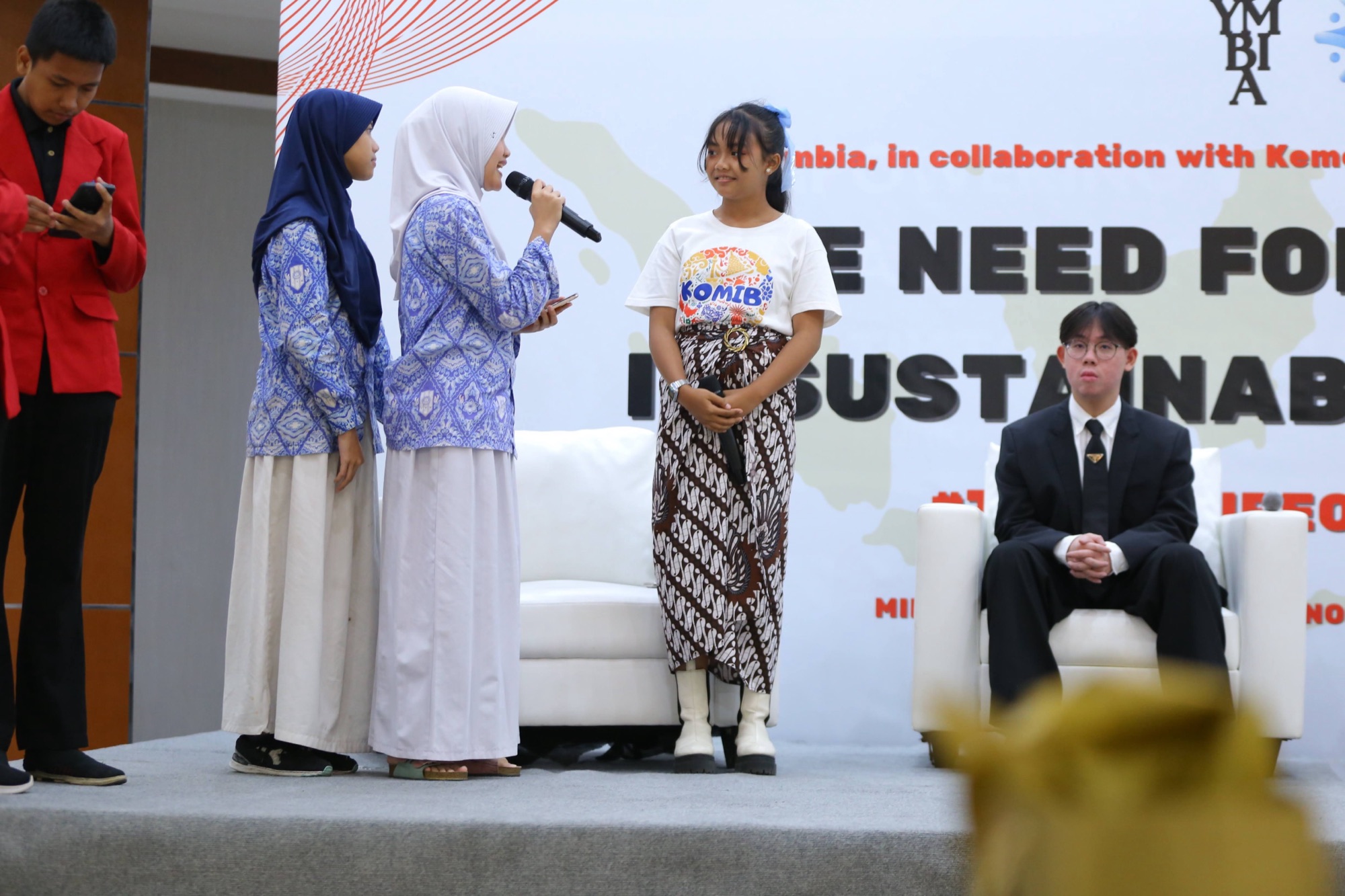
Alongside the workshops, Symbia speaks at schools and public events. In August 2025 it ran a seminar with Indonesia's Ministry of Creative Economy and KOMIB, titled The Need for Creativity in Sustainability Efforts.
Students either attend these events or go on to act as ambassadors. Most are across Indonesia, and there has been work with students elsewhere in Asia and in the United States.
Where
Five Indonesian provinces so far
Every trip is funded by the work itself, and every session so far has been taught free of charge.
Cultural heritage
Batik and Tenun, carried rather than replaced
Symbia products use locally sourced Batik and Tenun fabric, so the craft already present in these regions travels onto a global stage instead of being displaced by the new material.